


April 29, 2026
By Shubhii Verma
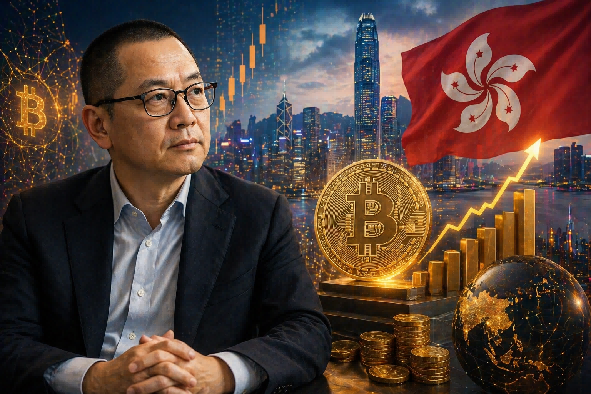
Asia’s crypto industry is moving into a new stage as Li Lin, the founder of the former crypto exchange Huobi, turns his attention to Hong Kong with a focused plan: creating a regulated path for institutional Bitcoin investment.
After China banned crypto trading in 2021, Hong Kong began building a clear regulatory system to attract digital asset businesses. Li Lin is now using this opportunity through Bitfire Group, a Hong Kong-listed company where he is the largest shareholder, to expand into Bitcoin-based asset management.
Bitfire recently agreed to buy the investment team and trading systems from Li’s family office, Avenir Group, for $1.6 million. While the deal size is small, its purpose is important. It gives Bitfire the expertise and infrastructure needed to launch professional crypto investment products within Hong Kong’s regulated environment.
At the heart of this plan is a strategy called “Alpha BTC.” This strategy aims to attract outside investors and help them earn returns from Bitcoin holdings. Many companies already hold Bitcoin as an asset, but they do not have structured ways to generate income from it. Bitfire wants to fill this gap.
According to Bitfire CEO Livio Weng, the company plans to attract funds equal to more than 10,000 Bitcoins within one year. Instead of simply holding Bitcoin, the strategy will use derivatives such as options trading. These trades will be based on Bitcoin itself or on products like the iShares Bitcoin Trust (IBIT) ETF. This approach is designed to suit both crypto-focused investors and traditional financial institutions in Hong Kong.
There appears to be strong demand for such services. Bitfire estimates that at least 40 Hong Kong-listed companies already own Bitcoin, but many do not know how to make additional returns from it. This creates a major opportunity for regulated asset managers who can offer professional solutions.
Li Lin’s experience supports this move. Through Avenir Group, he has become one of the largest Bitcoin ETF investors in Asia, including significant investments in funds managed by BlackRock.
The bigger picture shows an important shift in Asia’s crypto market. While mainland China continues to restrict crypto activities, Hong Kong is positioning itself as a bridge between traditional finance and digital assets. Bitcoin is no longer seen only as a store of value but is increasingly being treated as an institutional investment asset.
With experienced players like Li Lin entering the space through regulated channels, Hong Kong is strengthening its role as a key centre for institutional crypto capital in Asia.
